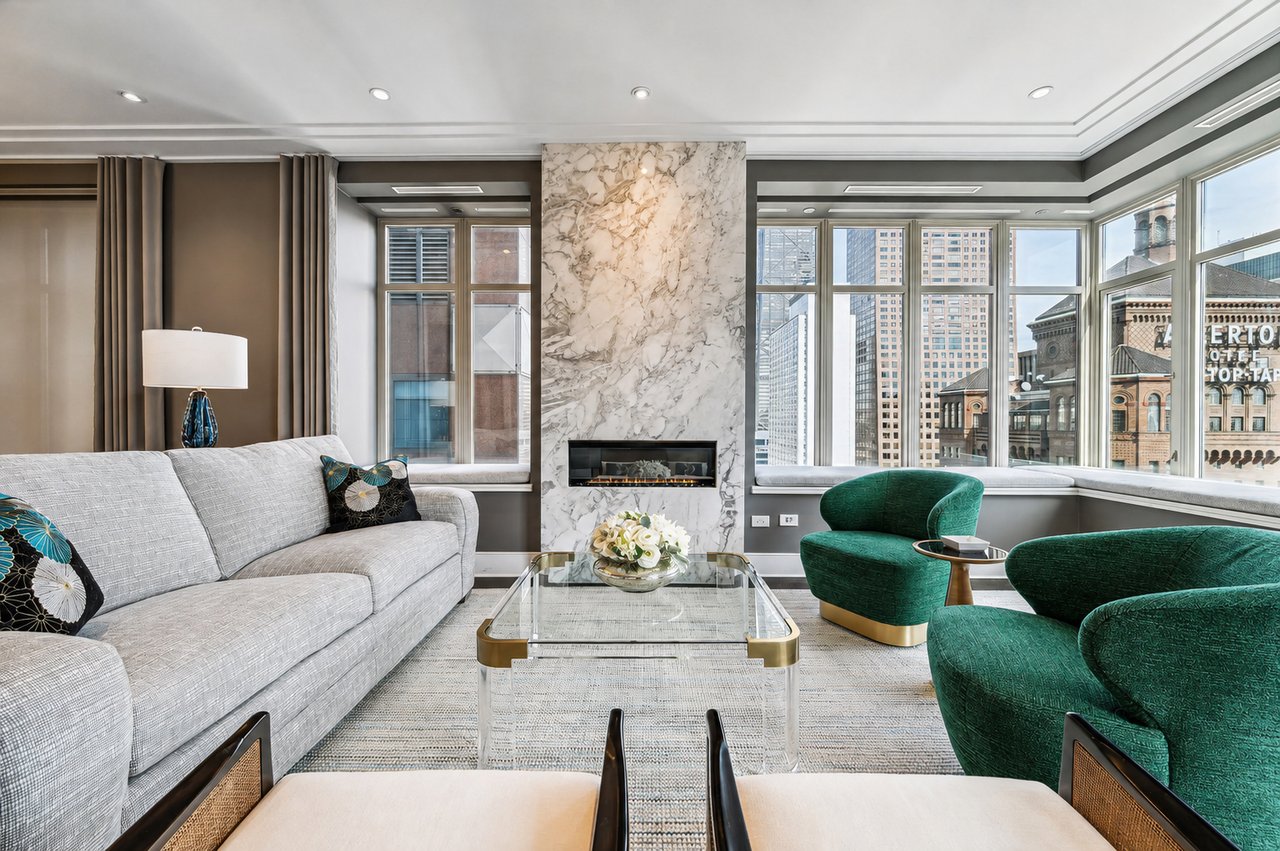
David Herro spent six years trying to sell his condo at the Palmolive Building. He listed the 31st-floor unit in July 2020 for $10.9 million, a number that made sense on paper: 5,500 square feet, full-floor privacy, an Art Deco address with a Playboy pedigree and a Hugh Hefner backstory that never stops being useful copy. Then came the price cuts. By January 2026 the ask had fallen to just under $6 million. The deal closed in early March at $5.5 million.
Herro, the deputy chairman at Harris Associates and one of the more recognizable names in Chicago finance, had paid nearly $6.8 million for the unit in 2013. The owner before him bought it in 2006 for $5.8 million. Run the numbers forward and the math is blunt: a unit inside one of the most photographed buildings on Michigan Avenue just sold for less than it did twenty years ago, before adjusting for a single dollar of inflation.
That would be a strange enough story on its own. It isn't the only one.
A Second Sale, Same Shape
Earlier in the same window, a different full-floor residence on the Palmolive's 23rd floor closed at $5.15 million. That unit had commanded roughly $5.8 million back in 2006. Two separate owners, two separate transactions, the same conclusion: the building's largest, most historically significant units are having trouble clearing prices they cleared two decades ago.
Unit | Earlier Sale Price | 2026 Sale Price | Result |
|---|---|---|---|
31st floor (Herro) | $5.8M (2006), $6.75M (2013) | $5.5M | Below both prior benchmarks |
23rd floor | ~$5.8M (2006) | $5.15M | Below 2006 benchmark |
Put next to each other, these aren't outliers canceling each other out. They're the same pattern showing up twice in one building in one reporting window.
And here's the part that should stop a buyer mid-scroll: even at a discount, the Herro sale still ranked as the third-highest-priced home sale in Chicago so far in 2026, trailing only a $6.5 million Lincoln Park mansion and a $6 million Gold Coast house on Dearborn Street. A transaction that represents a two-decade loss for its seller is still one of the priciest closings in the entire city this year. That tells you less about the Palmolive specifically and more about how thin the very top of Chicago's housing market has become. Big losses and record prices are happening in the same zip code, sometimes in the same building, at the same time.
The Building Isn't the Problem
If the story were simply "landmark buildings are falling out of favor," the retail deal happening two floors below these condos wouldn't make sense.
In June 2026, L3 Capital, a Chicago-based investor with a long track record buying up retail on Rush and Oak Streets, put the Palmolive's ground-floor retail under contract, including the Louis Vuitton store that anchors the building's Michigan Avenue frontage. The seller is Nuveen, the investment arm of TIAA, which paid $90 million for that retail space back in 2012 and had spent years trying to unload it without success. A private jeweler, David Yurman, is leaving the same retail base for a new lease on Rush Street, which on its face reads like more churn. But L3 Capital wasn't waiting around. It moved on the space anyway.
That's a meaningful signal. A sophisticated retail investor is betting real money that the Palmolive's ground floor, at the corner of Walton and Michigan, still commands premium rents in a corridor that's actively rebounding. The address hasn't lost its commercial pull. What's underperforming is a specific category of residential product inside it: the oversized, full-floor vintage condo.
What Actually Explains the Gap
Here's the mechanism that doesn't show up in any listing sheet.
The Herro unit carries roughly $9,230 a month in association fees. Its 2024 property tax bill ran close to $67,000. Add those together and you get close to $178,000 a year in fixed carrying costs, before a mortgage payment, before insurance, before anything else. That's nearly $14,800 a month just to hold the keys.
Every condo building has fixed costs: door staff, elevators, insurance, building systems. In a converted 1929 office tower with just over 100 residences, those costs get split across a small denominator. A full-floor unit, by definition, owns a large share of the building, which means it absorbs a proportionally large dollar amount of every one of those fixed costs, regardless of how much square footage the market actually wants at that price point. The building's landmark status, the same designation Chicago granted in 2000 and the federal government confirmed with a National Register listing in 2003, doesn't lower that bill when the roof or the mechanicals need attention. It usually raises the ceiling on what any given repair costs to execute correctly.
That math shrinks the buyer pool in a very specific way. You're not just looking for someone who wants 5,500 square feet downtown. You're looking for someone who wants that scale, wants the Palmolive's history, and is comfortable carrying close to $15,000 a month in fixed costs on top of the purchase price. That's a narrow intersection of buyers, and it gets narrower every time interest rates or insurance costs push carrying costs up faster than the pool of qualified buyers grows.
This pattern isn't unique to one address, either. Real estate trade reporting has flagged a string of similar downtown sales closing below decade-old benchmarks: a family selling a unit for roughly 46 percent of its 2007 purchase price, another condo trading below both its 2009 and 2005 prices, a separate 2025 sale closing millions under its 2007 and 2015 numbers. The common thread across these deals is size and vintage, not address. Big, older units built before today's carrying-cost math existed are the ones absorbing the pressure.
The Comparison Every Buyer Should Actually Be Making
If you're shopping trophy Chicago addresses and comparing a building like the Palmolive to a newer supertall, price per square foot is the number everyone quotes and the least useful one for this decision. The number worth asking for is unit count and how fixed costs get distributed across it.
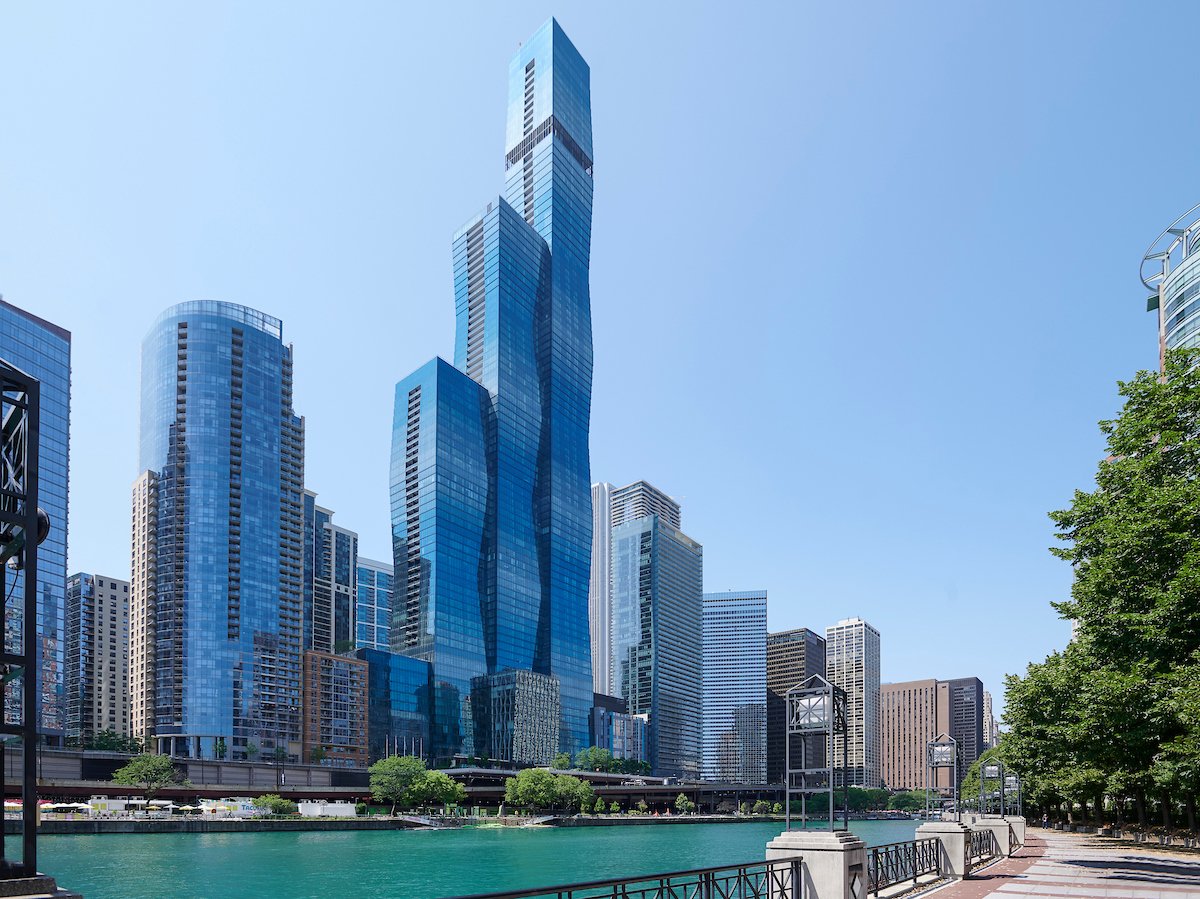
The Palmolive has just over 100 residences carrying its full weight of staffing, insurance, and preservation-driven maintenance. A newer tower like the St. Regis Chicago spreads those same categories of cost across 393 residences, which is nearly four times the base absorbing the same kinds of expenses. That structural difference matters more for a full-floor buyer than almost any other line item in the building's financials, because it determines how much of the building's overhead lands on your monthly statement versus your neighbor's.
None of this means a converted landmark is a worse buy than new construction. It means the calculus is different for large units specifically, and that difference gets lost the moment you compare buildings purely on dollars per square foot or on brand name alone.
Frequently Asked Questions
Does this mean the Palmolive Building is a bad investment? Not as a blanket statement. The building's retail base just drew serious institutional investment, and the address retains real cachet. What these two sales show is that oversized, full-floor vintage units carry a cost structure that narrows their buyer pool more sharply than smaller units in the same building or comparably sized units in newer, larger-unit-count towers.
Is this pattern limited to one building? No. The mechanism, large vintage units absorbing outsized fixed costs relative to a small total unit count, shows up across several Chicago sales that closed below decade-old benchmarks in the same reporting window. The Palmolive simply gives you two clean, back-to-back examples of it happening inside a single address.
If you're weighing a landmark conversion against new construction for a downtown purchase, the numbers on the listing sheet are the beginning of the analysis, not the end of it. RM Luxury Group works across both categories of building in downtown Chicago and can walk you through the assessment history, reserve position, and unit-level cost math before you write an offer. Request a private consultation to see how a specific building's economics compare to what the price per square foot alone would suggest.